


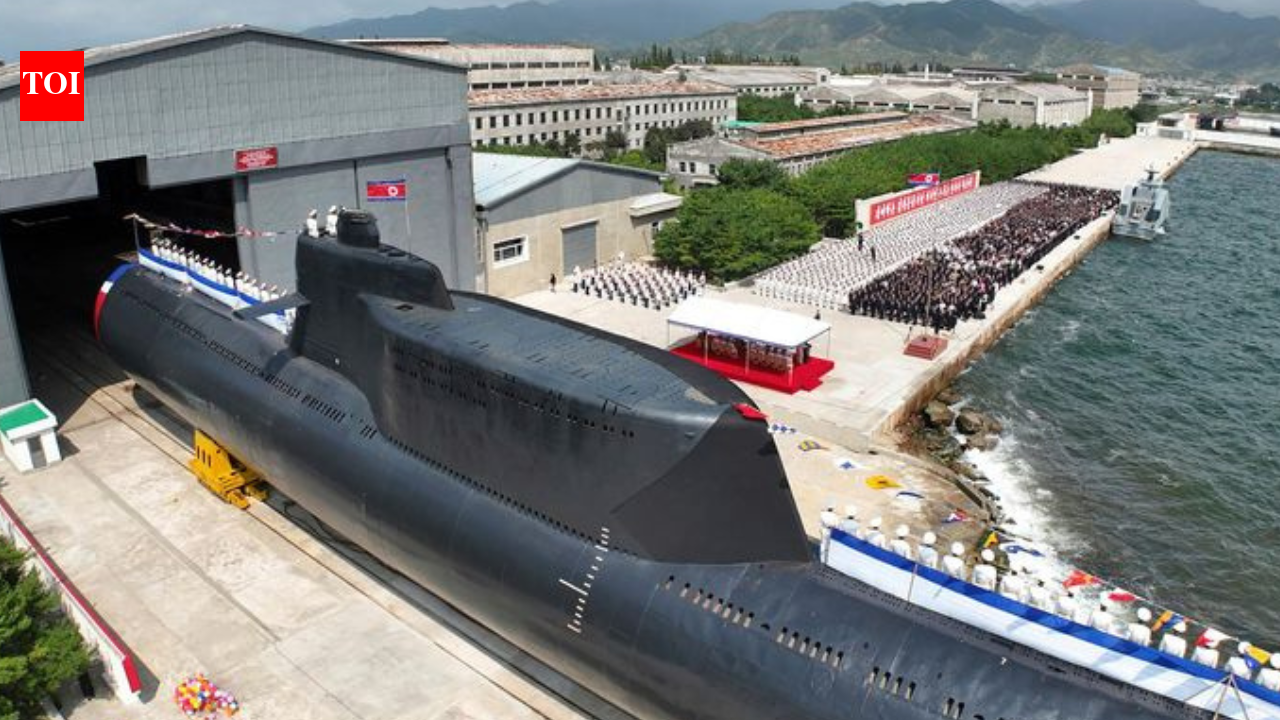
South Korea eyes nuclear submarines to counter North Korea, protect key Indo-Pacific sea lanes
South Korea’s nuclear submarine push eyes wider Indo-Pacific roleNorth Korea remains primary targetWider Indo-Pacific roleSeoul moves ahead with programmeUS Congress examines risksSouth Korea's planned nuclear-powered submarine fleet could eventually operate beyond the Korean Peninsula, with military experts arguing that the vessels could protect vital sea lanes, strengthen undersea cooperation with the United States and play a broader role in the Indo-Pacific.The debate over the programme has increasingly shifted from whether Seoul needs nuclear-powered submarines to how and where they should be deployed. “But secondarily, they could help maintain the balance of power in Northeast Asia and take the South Korea-U.S. alliance to another level.”Cheong said a South Korean nuclear-powered submarine fleet would inevitably factor into China's strategic calculations and could ultimately support US strategy in the Indo-Pacific.The potential expansion of the submarines' role comes as Washington continues to examine the strategic implications of Seoul's plans.Adm. Daryl Caudle, the US chief of naval operations, said last week that South Korea needs a “valid reason” for acquiring nuclear-powered submarines and should have a clear operational concept for the vessels. Seoul has also formally notified the International Atomic Energy Agency of its intention to begin consultations related to the programme.Defence minister nominee Kang Shin-chul has described nuclear-powered submarines as providing a “persistent and stealthy deterrent” against North Korea. He has also highlighted their potential role in protecting sea lanes and their broader implications for South Korea's defence, nuclear energy and shipbuilding industries.The programme is also drawing greater scrutiny in Washington.The US Senate Armed Services Committee has called for an assessment of how South Korea's nuclear-powered submarine programme could affect Indo-Pacific security, proliferation risks and costs, as well as the potential scope of future bilateral cooperation.For Seoul, the challenge will be to demonstrate that the submarines are not simply an expensive response to prestige or military competition, but a capability with a clearly defined strategic purpose.If the vessels are initially designed to counter North Korean submarine threats but retain the endurance and operational flexibility to protect maritime trade and support allied missions farther afield, their role could gradually expand from a peninsula-focused deterrent into a broader Indo-Pacific undersea capability.
Source: Times of India September 13, 2026 17:44 UTC