


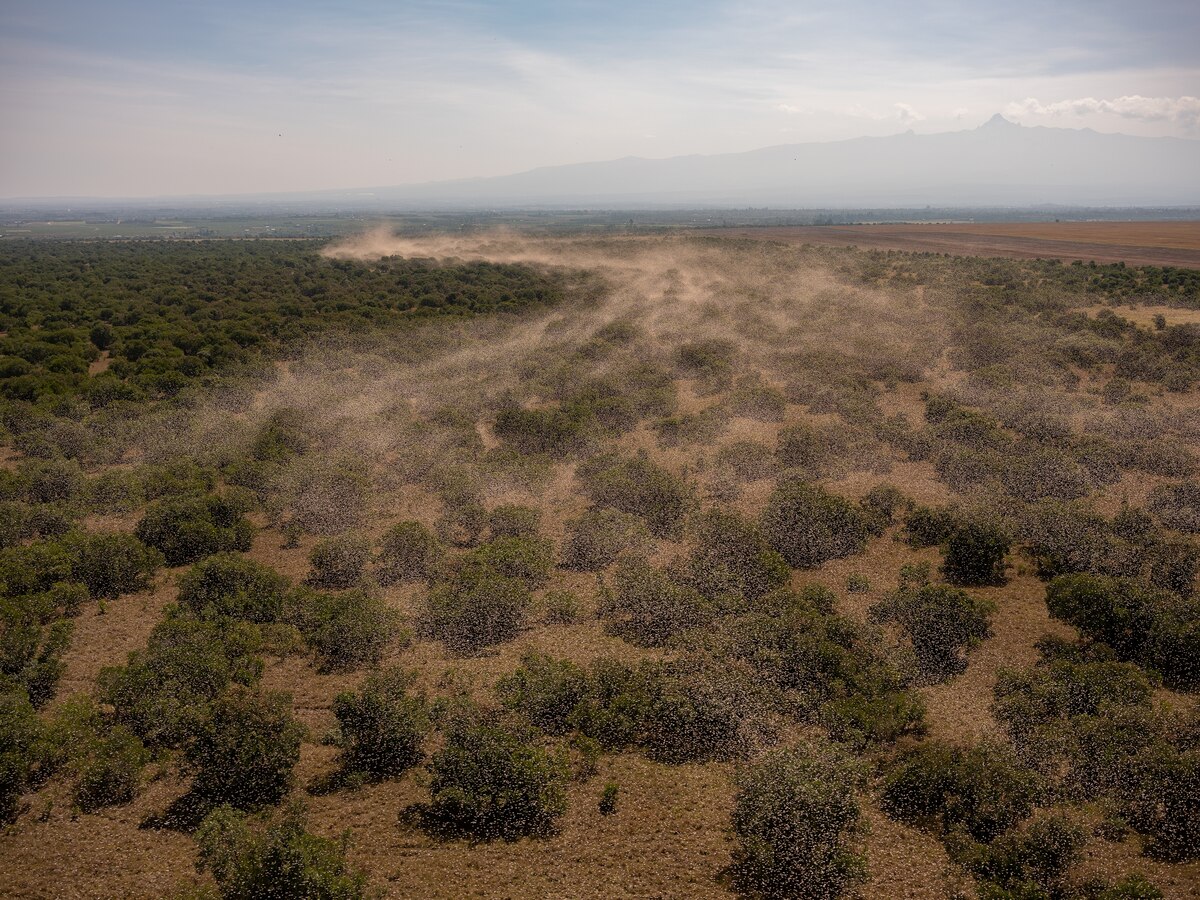
A locust plague hit East Africa. The pesticide solution may have dire consequences.
“They had no equipment, no expertise, no pesticides, no aircraft, no knowledge,” says Keith Cressman, the FAO’s senior locust forecaster. “It was a panic reaction,” says James Everts, a Dutch ecotoxicologist specializing in the environmental effects of pesticide use. “The whole idea was to manage this as fast as possible to ensure food security.”Please be respectful of copyright. Yet chemical pesticides remain the weapon of choice, accounting for 90 percent of the spraying in the current East Africa campaign. Biopesticide development began in the late 1980s after the end of a years-long locust plague that stretched from North Africa to India.
Source: The North Africa Journal March 24, 2021 16:30 UTC