



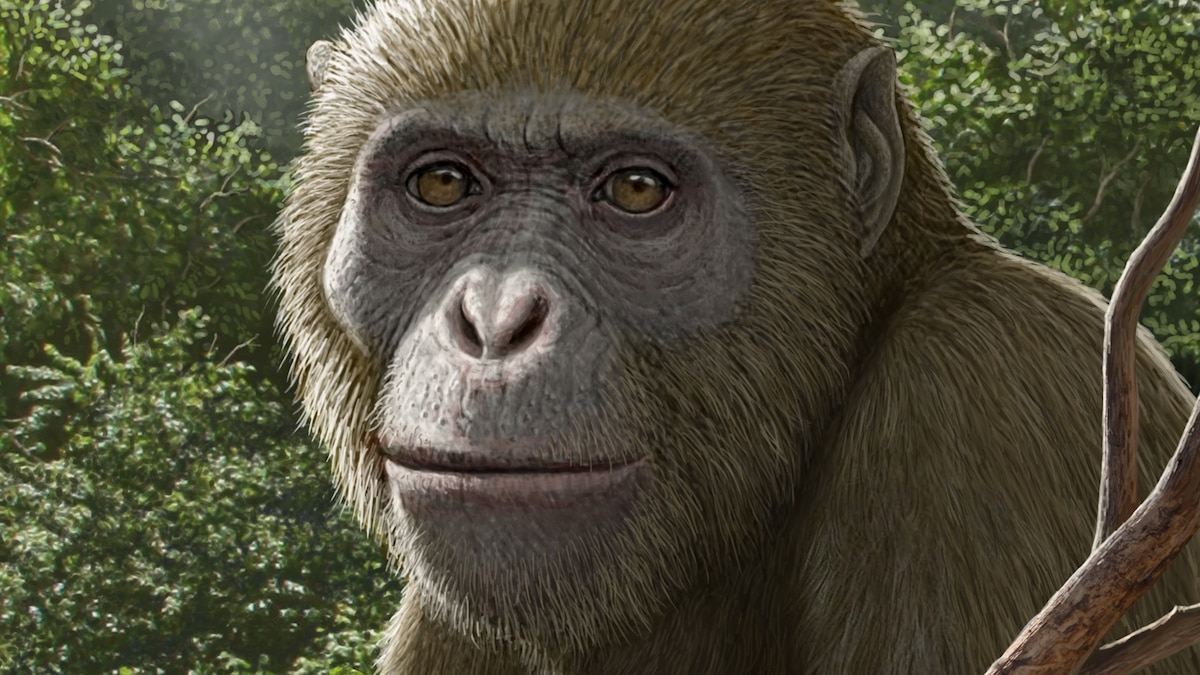
Newly discovered primate species could redraw the ape family tree
Most early ape fossils paleontologists have unearthed come from East Africa, close to the forests where some chimpanzees and gorillas survive today. The fossils are estimated to be 17 to 18 million years old, during the early Miocene, predating the dispersal into Eurasia. The scientists say the newly discovered ape, named Masripithecus moghraensis, is similar to what the ancestor of all hominoids—the group that includes gibbons, orangutans, gorillas, chimpanzees, bonobos, and humans—is predicted to have looked like. 3D reconstruction of the newly discovered ape Masripithecus moghraensis based on the jaw bones found in Egypt. Video by Hesham SallamThe finding, published Thursday in Science, suggests that the ancestors of modern apes may have originated in North Africa, rather than East Africa, and then migrated into Eurasia, enriching our understanding of early ape evolution.
Source: The North Africa Journal March 27, 2026 07:33 UTC