


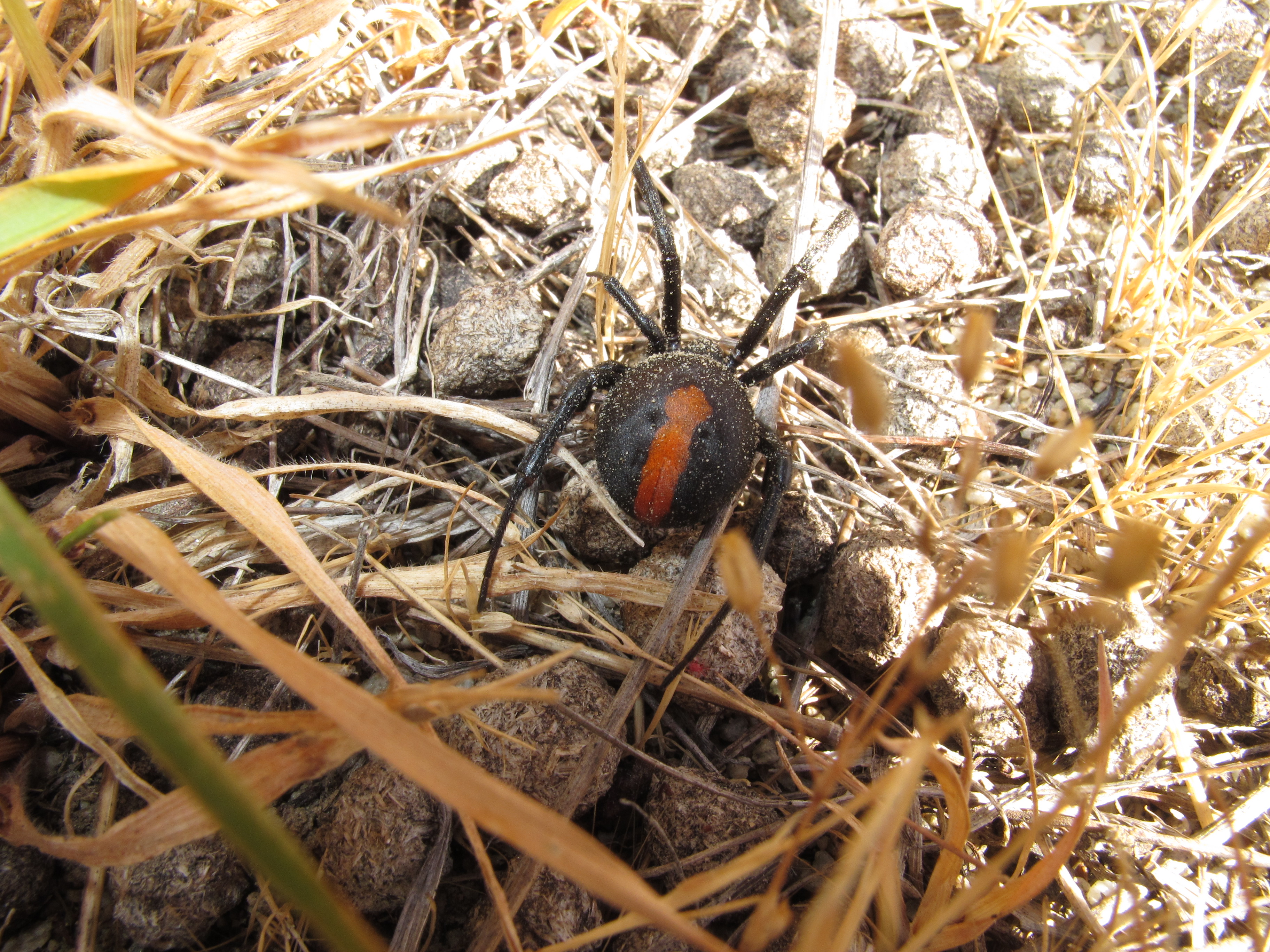
Redbacks threaten native beetle
The study found that rabbit holes that provided shelter for rabbits were also proving ideal spaces for the redback spiders to establish their webs. Carried out with the Department of Conservation (DOC) and University of Otago, the study has illustrated the struggle for the ongoing survival of the Cromwell chafer beetle – a nationally endangered native species that can now only be found in the 81 hectare Cromwell Chafer Beetle Nature Reserve between Cromwell and Bannockburn, in Central Otago. Investigation of those webs in the rabbit holes found the Cromwell chafer beetle was the second-most commonly found prey of the spiders. “We will survey for beetle larvae next summer to see what effect reducing redback spider nests is having on the Cromwell chafer beetle,” DOC Ecology Technical Advisor Bruce McKinlay said. “Hopefully we’ll find the beetle population has increased with fewer falling prey to this introduced venomous spider.”The Cromwell chafer beetle (Prodontria lewisi) is a large flightless beetle that lives underground in the sandy soils of the Cromwell river terrace.
Source: Otago Daily Times March 07, 2017 22:07 UTC


