



South America, Africa and Europe were once connected by land routes: 120-million-year-old dinosaur fossil reveals ancient bridge
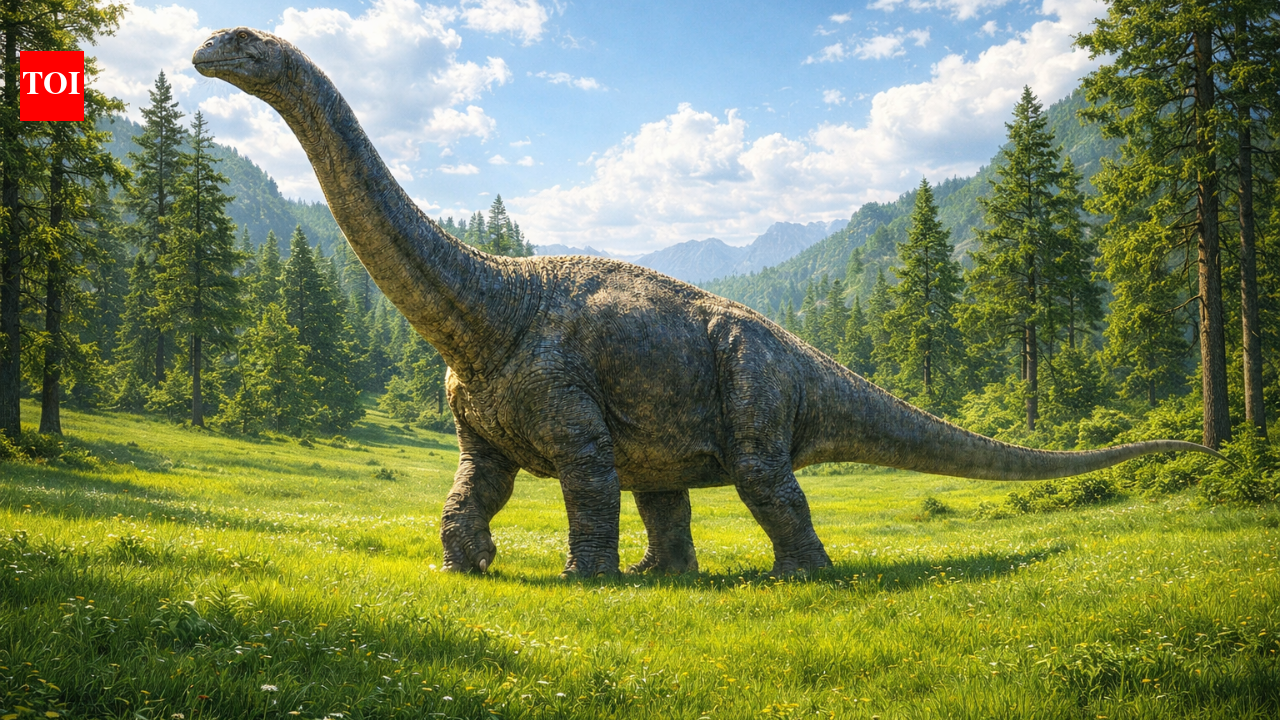
The remains belong to a previously unknown species of giant long-necked dinosaur that lived around 120 million years ago during the Early Cretaceous period. What makes the discovery particularly significant is its close evolutionary relationship to a dinosaur species discovered in Spain, suggesting that distant regions of the planet were once connected by land routes.The finding strengthens a long-standing scientific idea that South America, Africa and parts of Europe were linked by land corridors before the Atlantic Ocean fully opened. Their findings were eventually published in the Journal of Systematic Palaeontology, where the species was formally described.What made the discovery particularly remarkable was its unexpected connection to a European dinosaur. When researchers examined the fossil anatomy, they found striking similarities between the Brazilian dinosaur and a species discovered in Spain called Garumbatitan morellensis.Both dinosaurs share distinctive skeletal traits, especially in the vertebrae and thigh bones. Around 120 to 130 million years ago, the continents were still in the process of breaking apart from earlier supercontinents.At that time:These geological conditions likely created a chain of land corridors stretching from Europe into Africa and eventually into South America.
Source: The North Africa Journal March 14, 2026 20:56 UTC