




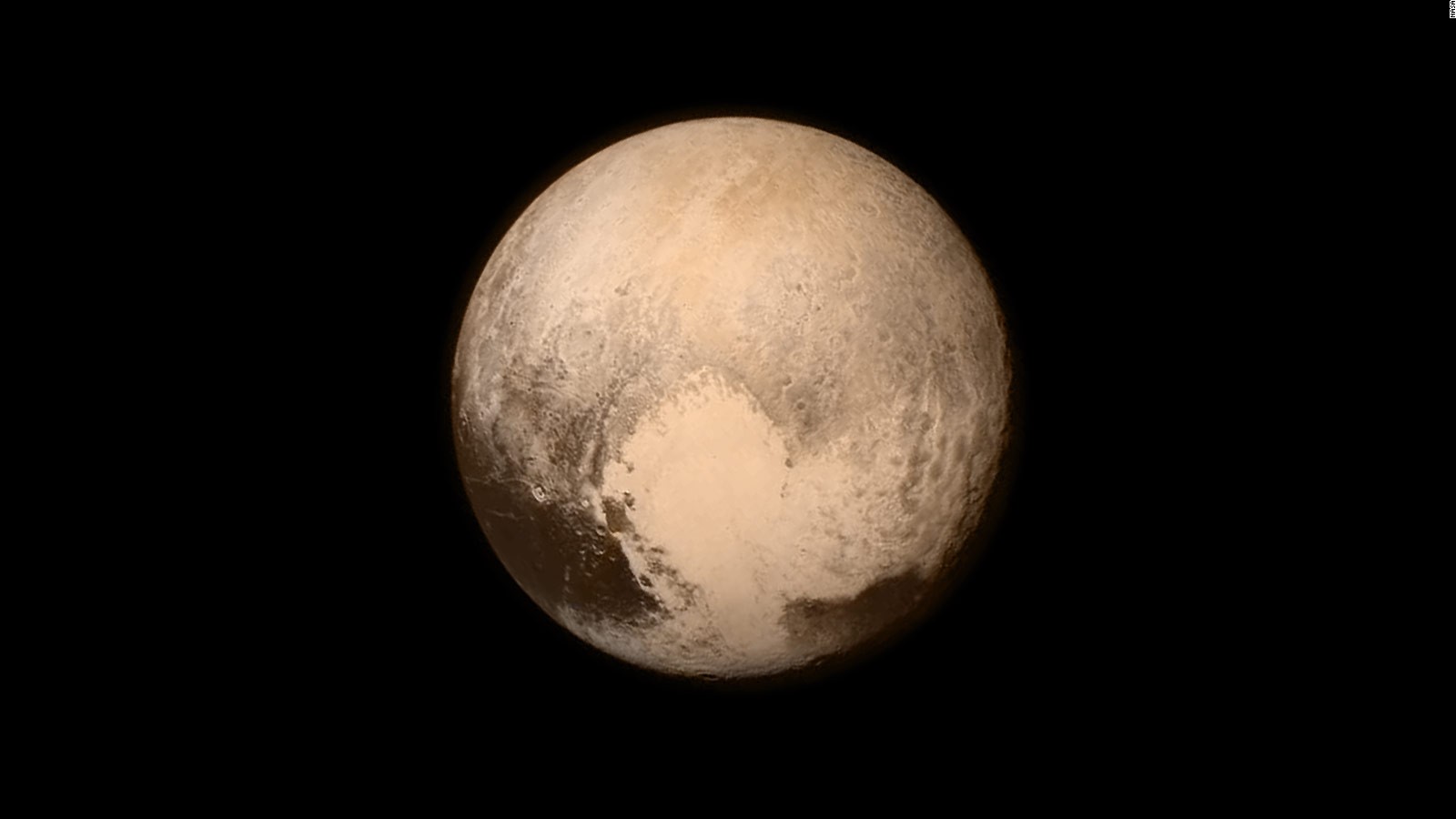
What keeps Pluto's ocean from freezing?
One of the big revelations from the flyby was the discovery of an ocean beneath the icy shell encapsulating Pluto. The ice shell was thin in a spot near the equator that's about the size of Texas, known as Sputnik Planitia, which helped researchers notice Pluto's odd topography and suggest the ocean's existence. And rather than forming a bubble, the ice shell should have flattened over the frozen ocean. But Pluto's ocean isn't frozen, so researchers used New Horizons data and computer simulations to model what might keep the ocean from freezing. Their study was published Monday in the journal Nature GeoscienceThe most likely scenario is gas between the ocean and the ice shell that acts like an insulating later.
Source: CNN May 20, 2019 16:41 UTC