


Why isn’t Venus like Earth? New space mission aims to find out
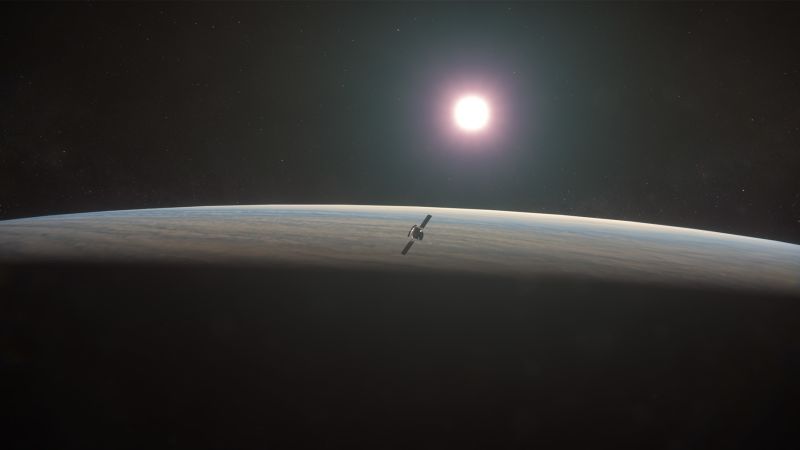
The mission builds on ESA’s first spacecraft sent to map the planet’s atmosphere, Venus Express, which orbited Venus from 2005 to 2014. It’s one of several missions in development to study Venus, including NASA’s DAVINCI and VERITAS expeditions set to launch within the next decade. An illustration shows the laser triangle configuration of the LISA mission, which will use three spacecraft to detect gravitational waves, which are depicted emanating from two black holes. ESAThe LISA mission includes three spacecraft that will fly 2.5 million kilometers (about 1.6 million miles) apart in a triangle-shaped formation. Golden cubes inside each spacecraft will help the LISA mission detect gravitational waves.
Source: CNN January 27, 2024 14:17 UTC