
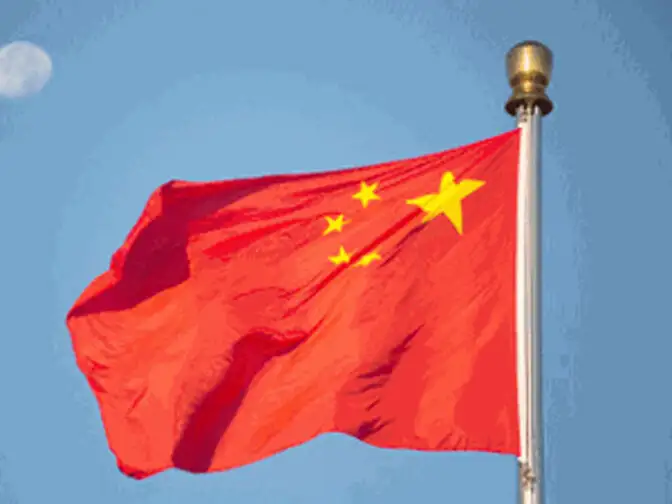
aircraft carrier: China launches 1st domestically-made aircraft carrier
That limits the weight of payloads its planes can carry, its speed and the amount of time it can spend at sea relative to American nuclear-powered carriers.The main hull of the new carrier has been completed and its power supply put into place. That compares to 85-90 fixed wing aircraft and helicopters carried by a Nimitz-class carrier.The new carrier is part of an ambitious expansion of the Chinese navy, which is projected to have a total of 265-273 warships, submarines and logistics vessels by 2020, according to the Washington, D.C.-based Center for Naval Analysis. That compares with 275 deployable battle force ships presently in the U.S. Navy, China's primary rival in the Asia Pacific.The U.S. operates 10 aircraft carriers, has 62 destroyers to China's 32, and 75 submarines to China's 68. The U.S. Navy has 323,000 personnel to China's 235,000.China has offered little information about the roles it expects its carriers to play, although its planning appears to be evolving as it gains more experience. The Liaoning was initially touted mainly as an experimental and training platform, but in December was declared to be combat-ready and has taken part in live-firing exercises in the South China Sea, where tensions have risen over China's construction of man-made islands complete with airstrips and military structures.
Source: Economic Times April 26, 2017 04:41 UTC